

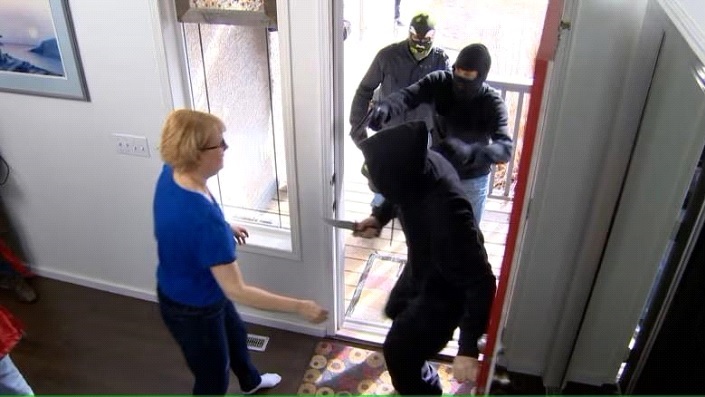
Startle Reflex and Stress Response – Similar but Not the Same
By WR Mann
The startle reflex and stress response are core biological and psychological realities that directly affect whether someone can even access their physical skills in a real-life encounter. Yet, they are often overlooked because:
- They’re not well understood by instructors, especially those without a background in physiology, neuroscience, or behavioral psychology.
- They’re hard to replicate in training without inducing real fear, chaos, or uncertainty – conditions that are difficult (and risky) to simulate in a classroom.
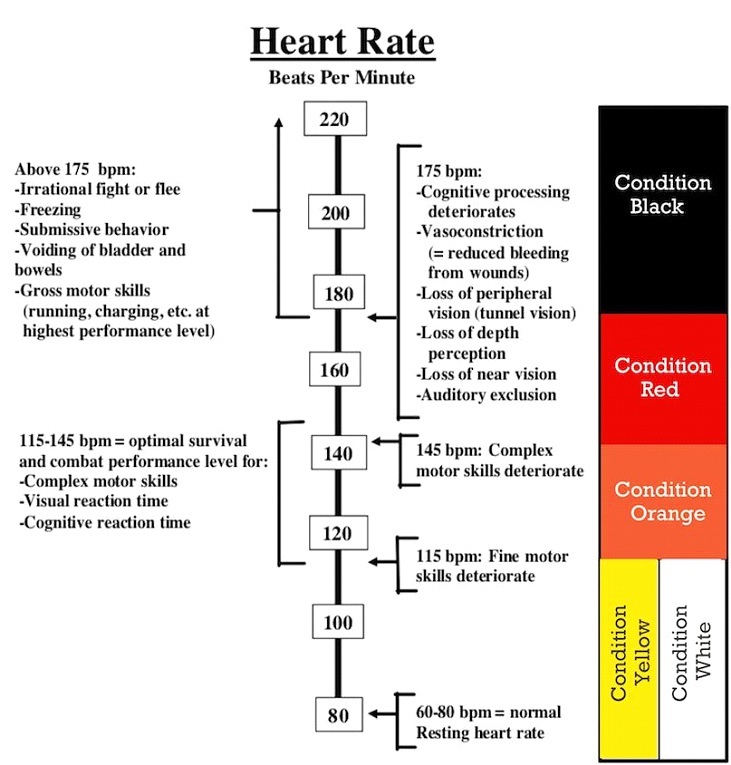
- They challenge the myth of perfect technique. Under stress, fine motor skills degrade, tunnel vision kicks in, auditory exclusion occurs, and decision-making narrows. This means the most “perfect technique” goes out the window unless it’s been trained under pressure.
The Startle Reflex
The startle reflex is a protective mechanism in response to a strong, sudden stimuli in humans and animals, whereby an involuntary whole-body reaction is triggered by a startling stimulus. It launches the “Fight-or-Flight” response. Physiological indicators of the startle reflex include muscle contractions, blinking, a surge of adrenaline, and an accelerated heart rate.
The Stress Response
A stressful situation, such as a perceived attack, can also trigger a cascade of stress hormones that produce well-orchestrated physiological changes. A stressful incident can cause the heart to pound, your breathing quickens, your muscles tense, and beads of sweat to appear. This combination of reactions to stress is also part of the Fight-or-Flight response, a survival mechanism that enables people and other mammals to react quickly to life-threatening situations.
The Difference Between the Startle Reflex and Stress Response
The Startle Reflex
The startle reflex is an unconscious defensive and immediate response to a sudden or threatening stimuli – that happens – NOW – in the moment such as a sudden noise or sharp movement. It’s often associated with a sudden and violent attack – it triggers the Fight-or-Flight response.

The Stress Response
The stress response refers to a conscious preparation to a perceived impending attack that is not immediate – but may be a few seconds away. It also triggers the Fight-or-Flight response but to a much lesser degree – depending on your training.
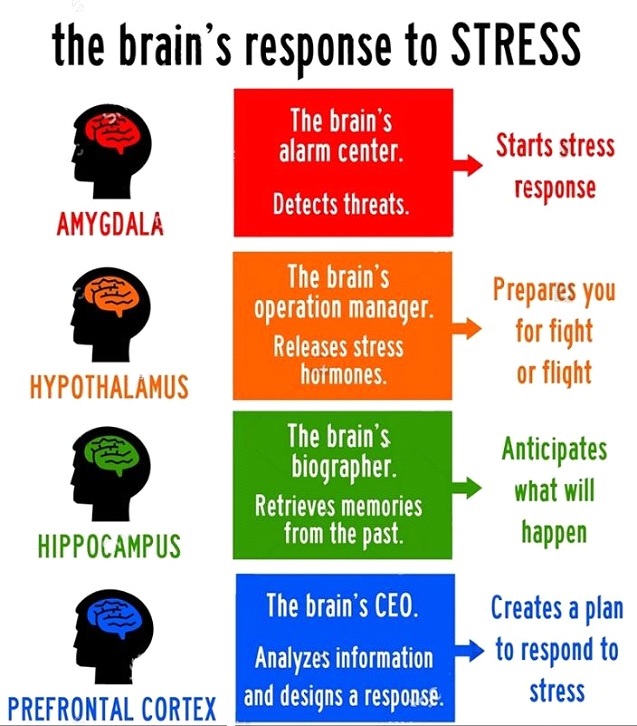
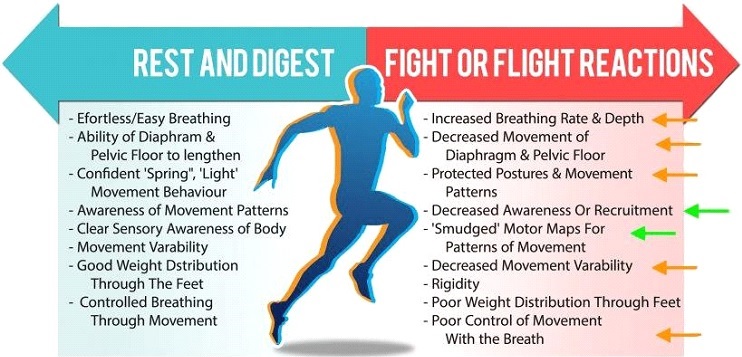
Examining the Fight or Flight Response
Originally, Fight-or-Flight were thought to be the only responses to sudden trauma and/or stress. It’s controlled by the autonomic nervous system, the endocrine system, and the hypothalamic-pituitary-adrenal – HPA axis. However, there are actually four major trauma responses: Fight, Flight, Freeze, and Fawn.
The Fight Response
The fight response is a physiological and psychological reaction to a perceived threat, where the individual prepares to confront or attack the danger. Examples of the fight-response include yelling, physically defending oneself, or reacting with anger or resistance in a high-stress situation.
The Flight Response
The flight response is a reaction to stress in which an individual seeks to escape or avoid a perceived threat. Examples of the flight response include running away, avoiding confrontation, or removing oneself from the threatening environment.
The Freeze Response
The freeze response is a reaction to stress where the body and mind temporarily shut down or become immobilized in the face of a perceived threat. This response is marked by a sudden stillness, slowed breathing, and a sense of being “stuck” or unable to act. It’s the body’s way of avoiding detection or preparing for the next course of action. Examples of the freeze response include feeling paralyzed with fear, going silent, or being unable to move or speak during a high-stress or traumatic event.
The Fawn Response
The fawn response is a reaction to stress in which an individual attempts to appease or please a perceived threat to avoid conflict or harm. This response often develops from prolonged exposure to trauma, particularly in relationships involving abuse or power imbalance. The fawn response includes people-pleasing, overly accommodating others, suppressing personal needs, or agreeing with someone to prevent confrontation or rejection. A major example is domestic violence.
Symptoms of the Startle Reflex and Stress Response
A Surge of Adrenaline
Adrenaline helps your body react quickly to a threat. It makes the heart beat faster, increases blood flow to the brain and muscles, and stimulates the body to make sugar to use for fuel. When adrenaline is released suddenly – it’s often referred to as an adrenaline rush.
Rapid Heart Rate and Breathing
Heartbeat and respiration rate increase to provide the body with the energy and oxygen needed to fuel a rapid response to danger.
Extensive Sweating
Contractions of the muscle cells below the surface of the skin to stimulate perspiration.
Dilated Pupils
In times of danger, the body prepares itself to become more aware of its surroundings. Dilation of the pupils allows more light into the eyes, resulting in better vision of your surrounding area.
Pale or Flushed Skin
During Fight-or-Flight, blood flow to the surface areas of the body is reduced while flow to the muscles, brain, legs, and arms is increased. Paleness or alternating between a pale and flushed face as blood rushes to the head and brain is common. The body’s blood clotting ability also increases to prevent excess blood loss in the event of injury.
Trembling
The muscles tense and become primed for action, which can cause trembling or shaking.
Additional Symptoms

Tachypsychia
The startle reflex and the stress response can both put you in this state. In some circumstances, individuals may also experience tachypsychia – a distortion of time. During tachypsychia, you may feel that time is either moving faster or slower. This effect is caused by epinephrine hormones, due to increased brain activity.
*Example: Once, while motorcycling in Thailand, I forgot to drive on the left side of the road (which is the norm) and nearly crashed into a large transport truck speeding my way. To avoid hitting the truck I veered off the road and down the side of a steep hill – I began to see my descent below in slow motion, yet I was unable to do anything about it.
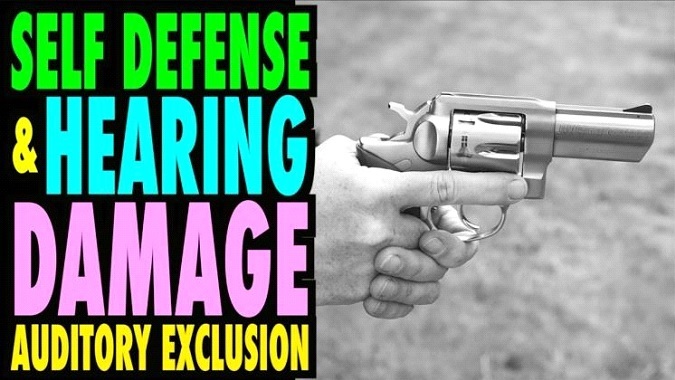
Acoustic Startle Reflex
A temporary auditory exclusion under a startle response can occur in the body through a combination of actions. The acoustic startle reflex is generally thought to be triggered by an auditory stimulus greater than 80 decibels. Military personnel, law enforcement, and firefighters have often reported sudden hearing loss after being exposed to explosions or other loud noises.
Tunnel Vision
Tunnel vision under the startle response is a narrowing of the visual field that occurs when the body is suddenly shocked or threatened. This physiological reaction is caused by a surge of adrenaline and heightened arousal in the nervous system, which directs focus to the perceived threat and limits peripheral awareness. As a result, you may lose sight of surrounding movements or secondary dangers, making it harder to assess the full situation. While it’s meant to enhance survival by concentrating attention, tunnel vision can reduce situational awareness and impair decision-making in high-stress scenarios.
*Example:
Again – referring to my motorcycling mishap while under tachypsychia, I also had tunnel vision as I was catapulted down the hill – I lost my peripheral vision.

If your goal is to train for the reality of violent encounters, you must prepare not just your body, but your nervous system. This means deliberately including stress inoculation in your training, so your mind and body learn to function under duress. Below are proven training methodologies that prepare you for the stress response and enhance real-world survivability.
Effective Training Drill for the Startle Reflex
A highly effective training method employed by armed forces and reality-based self-defense instructors involves sensory deprivation — typically by blindfolding the student or placing a hood over their head. While the student is disoriented, instructors position multiple attackers around them. When the hood is suddenly removed, the attackers launch a coordinated assault. This drill replicates the chaos, confusion, and adrenaline surge of a real ambush, forcing the student to rapidly assess threats, manage panic, and engage using gross-motor skills under stress.

Adrenaline Stress Training
Model Mugging is a self-defense training program developed in the 1970s, designed to teach individuals — especially women — how to effectively respond to real-life attacks through realistic, full-force scenarios. The program was created after a martial arts instructor realized that traditional training wasn’t enough to prepare students for the emotional and physical shock of sudden violence.
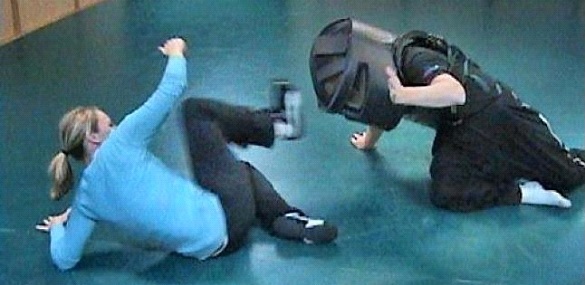
In a typical Model Mugging class, students wear protective gear and face off against fully padded instructors (a Bulletman) who simulate realistic assaults. These scenarios often include shouting, surprise attacks, and high-pressure situations that mimic real-world violence. The goal is to trigger the startle reflex and stress response in a controlled environment, helping students practice overcoming those reactions through learned techniques and assertive responses.
Other programs inspired by or similar to Model Mugging include Impact Personal Safety, FAST Defense, Defense Science and various reality-based self-defense systems that incorporate adrenaline stress training. These programs often involve role-playing, verbal boundary-setting, and scenario-based drills to help students develop not only physical skills but also the emotional resilience to fight back effectively.
Many participants report positive effects — gaining confidence, overcoming past trauma, and feeling genuinely prepared to handle threats. The realism and emotional intensity of such training are key to building automatic, reflexive responses that can override the body’s freeze or panic reaction in a true emergency.
*Example:
My first encounter with this type of training was in Colorado under Bill Kip and his crew. Students would line up, and one or two instructors in Bulletman suits would scream and curse at individual students. This would create a surge of adrenaline — and suddenly, you feel like you’re fighting in a trance — or moving through a fog.
This type of training is valuable because it exposes how most people initially react when caught off guard. The first time you engage in a high-stress defensive drill like this, old habits — often ineffective or overly complex — tend to surface. These are usually remnants from past training that didn’t account for the effects of adrenaline or chaos. But with continued exposure, you begin to shape and refine your adrenaline-induced responses. Over time, you replace those bad habits with simple, functional actions that actually hold up under real pressure.
Breathing Techniques
Controlled breathing helps regulate adrenaline and calm the nervous system. Under the startle response, individuals may temporarily hold their breath due to the sudden shock. Controlled breathing is more effective with the stress response, as the perceived attack is still a few seconds away. You won’t have time to initiate box breathing; however, relaxing your neck and shoulders and taking a deep breath can slow the adrenaline surge and bring your heart rate down.
Regulating Your Breathing to Bring Down the Adrenaline Surge
Regulating your breathing is crucial because it directly influences your body’s stress response. When you breathe slowly and deeply, you activate the parasympathetic nervous system, which counters the effects of adrenaline and calms the body. This helps reduce heart rate, lower blood pressure, and improve focus and decision-making during high-stress situations.
Without controlled breathing, adrenaline can overwhelm the system, leading to panic, tunnel vision, impaired judgment, and physical tension — making it harder to respond effectively. Managing your breath is a simple yet powerful tool to maintain control and clarity when facing sudden threats.
If you’re seeking a more reality-based approach to self-defense, integrating startle and stress-response education is not optional — it’s essential.

W.R. Mann
W.R. Mann is an author, speaker and coach for a Reality-Based-Training (RBT) defensive survival program “DefenseScience.com”. He also headed Realfighting.com – He has written articles for Black Belt magazine, Budo magazine, FightingArts.com and USA dojo.com among others.
WR co-wrote an article about RBT in the “Martial Arts of the World, An Encyclopedia of History and Innovation.” He was also featured in a National Geographic special “The Use of the Bowie Knife in the Second Seminole War.” He has appeared in various martial related subjects on TV in Asia and North America.
WR’s background includes a lifelong study of traditional martial arts, close quarter combat and sports fighting since childhood including judo, traditional Japanese jujitsu, karate, boxing, wrestling, arnis, escrima and gun disarms.
WR was an early advocate of Reality-Based-Training and has taught Reality based Training defense seminars in 16 countries to law enforcement, military personnel, government agencies, martial artists civilians and young adults. Training focus includes the pre-physical conflict areas of awareness and avoidance in addition to physical defenses and technique (empty hand and weapon).
The Defense science program motto is: “We teach skills, that anyone can use to deal with a wide spectrum of situations from the smallest of daily intrusions right up to dealing with and winning a dangerous physical attack.
For more information contact:
Defensescience@gmail.com
Director@defensescience.com
Search for more articles by this author: