Kata As The Foundation Of Practice
By Christopher Caile
It was the summer of 1985. It had rained all morning and now the moisture lay like a thick wet blanket in the sweltering heat that lingered in the late afternoon. I was following my friend Lee down the street in the suburbs of Toronto. He turned into an alley and then beckoned me down a rickety set of wooden stairs into the basement tucked below what I would later find out was a Chinese restaurant. He followed.
It was like stepping through some time machine into the martial arts of old China. There in the dim light were a half dozen Chinese students, their tee shirts and shorts soaked with sweat, their arms glistening as they punched, blocked and did forms. Watching them was an older gentleman sitting on a stool off to one side.
When they saw me, everything stopped. You could see, “Who is this person?” in the eyes that turned towards us. Even though Lee was behind me, several of the students stepped forward to block my way, but the old gentleman barked a few curt words and the students stepped aside like the water of the Dead Sea parting before Moses. A faint smile greeted me when Lee introduced me to the old gentleman, his uncle and Sifu (teacher).
I had known Lee for about five years in Buffalo while he was a student at the State University of New York at Buffalo. We first met when I was introduced to him while looking for someone to translate some martial arts material into English from Chinese. We had been friends ever since. Whenever the subject of martial arts came up, he never mentioned any knowledge. He showed no interest at all in the karate I was then teaching at the University. After about three years, however, he announced that he now knew me well enough to say something about his family fighting discipline. It didn’t have a name, he said, “just family system,” although he noted that his uncle now did teach a couple of non-family students up in Canada. Lee said he had studied it off and on since he was a young boy. And since his uncle had no son, the family was looking for him to return to Canada to take over the system once he was finished with his education.
The system had been passed down for six generations, starting in the mountain area in China which was the birthplace of Taoism. His family had later moved to southern China and then Hong Kong. Hs father and uncle moved to Canada after WWII. Being a martial arts researcher and interested in the Chinese influence on the development of karate, I asked him if there was a chance I could meet his uncle, and maybe even see or practice with him?
At that time Lee wasn’t very optimistic that his uncle would see me, but he himself taught me a few basics. But there were conditions. I could not mention to anyone what I was studying, or that I was studying at all, not even to my family. If I ever showed or demonstrated their techniques to anyone outside the system, training would immediately end, he said. “I am showing you part of my family system,” he said, adding that I had assumed a great burden, his trust.
When I asked Lee about the reason for secrecy, he said his family believed that no one should know you have martial skills, much less ever see them. That way there would be no challenges or threats from authority. And, if and when self-defense was needed, the attacker or attackers would be totally surprised, less able to counter or defeat what they had never seen, or much less suspected. Their art was their advantage, he added, there if ever needed. Also, it led to long life and health. His uncle’s father in Hong Kong had taught the art into his 80’s and had been powerful right up to the time of his death at 89.
It took two years and countless additional requests through Lee, but finally here I was in Toronto looking into the eyes of his uncle. I knew his uncle didn’t like or trust Westerners very much, but maybe as a trusted friend of his nephew . . .
I was allowed to begin. The basement room was about 15 feet wide and 30 feet long. The floor was wood, the ceiling was low, lights dim and there was no air-conditioning, nor much heat in the winter, I would learn. In a tall locked wooden cabinet at the end of the room were weapons and other special training equipment. As to the class itself, there was no structure. We would meet at a designated time, bow to the Sifu and then begin assigned practice on our own. There were no group drills, no uniforms, no ranks or titles.
In basic English Sifu instructed me, “Do this” and later “Now, do this.” The first several months of training were limited to fundamentals. There were warm ups and finger strengthening techniques, basic punching/blocking (combined) drills that were also combined with stepping. There was also emphasis on basic “foundation” exercises to develop power. These involved rapid twisting of the trunk (rather than the hip) combined with collapsing or expansion of the chest, spine and torso (depending on the technique). When combined with proper breath, these elements produced loose explosive and very powerful movements.
Lee had also cautioned me to practice only what I was taught and not try to observe or follow more advanced students. If I wanted to observe, I was to do so out of the corner of my eye while exercising. “Don’t practice anything my uncle (Sifu) hasn’t shown you himself,” I was cautioned. Months later when once or twice I did try to use a move I had observed a more advanced student do, I was quickly cautioned to wait for the teacher to teach me that move.
It took three months before Sifu showed me the first introductory move of a kata — how to start, followed by two double hand moves with a twist of the body and an elbow strike. With great attention to detail, Sifu demonstrated the technique slowly a few times, then at normal speed. His technique was so powerful and fast that it was just an explosive blur. Thereafter the one admonition I heard over and over was “relax,” although it took me several practices to know what was said. Even though Sifu spoke basic English, his accent was so strong that I often had to turn to another student for translation. To help me there was Lee, but also a Toronto cop, who was both open to my studying and a good translator too. Several other students, Lee told me, were upset that any non-Chinese had been allowed into their art.
About this time Sifu also taught me the first qi gong (method of energy development) exercise, to be practiced before and at the end of every practice. Warm ups and stretching was then followed by basic foundation exercises. The remaining time was spent with kata. Over and over I practiced the basic first moves that Sifu had shown me — with speed, but with attention to proper form. No nuance was too minor, every hand position, angle of movement and foot position was practiced — maybe five hundred to a thousands times in one practice. Lee and the friendly student cop would also often stop me to again demonstrate the precise hand, trunk/pelvis, shoulder and arm movements, each movement leading to the next without hesitation, without stopping. Over the ensuing months moves were added.
To learn the first kata took over a year. Up to this point there had been no freefighting, but basic two man drills had been added, each employing techniques from the first kata. The teacher also gave me a bottle of home made dit dat jow (a Chinese herbal anti-inflammatory and healing lotion) that I was told to rub on my joints before and after practice. With Iron Palm training there was another concoction.
There were only four or five kata in the system that I could see, each teaching a variety of more sophisticated techniques. There was also a pole (similar to the bo in the Japanese martial arts) as well as other weapon kata too. The speed of execution is what surprised me most. A kata of about 80 moves was completed in under 30 seconds.
In class Sifu would often show us applications too. A student would attack with a grab, punch or kick, and right there out of the kata would be the counter, usually a very powerful one too. Then Sifu would demonstrate other applications for the same technique. Students would then practice these self-defense moves in pairs, over and over. Whenever Sifu demonstrated on me, however, the whole technique seemed to change. I think he found some humor in the way he was able to manhandle me. When he grabbed my arm, for example, his fingers penetrated deeply, like the jaws of some animal. It was painful. At other times his grab or push was so powerful I was literally pulled forward off my feet or thrown backwards to the ground. The power was amazing.
Lee told me that practice fighting was avoided until the correct movements and techniques were so engrained that the student used them automatically. To help in this process there were two person drills that used offensive and defensive (punching, kicking, blocking, parrying and counter movements) techniques taken from the kata we had learned. Only after these drills had been mastered were students allowed to start practice fighting.
My training in this unique Chinese family system taught me a lot about kata and its original meaning and function. I now better understand what the early karate masters meant when they said that kata was the foundation, the essence and primary training tool of karate itself.
I asked Lee’s permission before writing this account. Like myself, Lee said that he and Sifu felt that too much knowledge of ancient principles and concepts were being lost. Therefore I could say a little, but not too much. They hoped others could learn from what their own family had so cherished and practiced over the centuries. At their request some things were omitted and others modified.

About the Author Christopher Caile
Screenshot
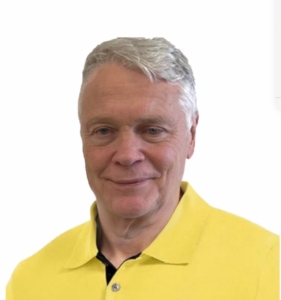
Christopher Caile is the Founder and Editor-In-Chief of FightingArts.com. He has been a student of the martial arts for over 65 years.
He first started in judo while in college. Then he added karate as a student of Phil Koeppel in 1959 studying Kempo and Wado-Ryu karate. He later added Shotokan Karate where he was promoted to brown belt and taught beginner classes. In 1960 while living in Finland, Caile introduced karate to that country and placed fourth in that nation’s first national judo tournament.
Wanting to further his karate studies, Caile then hitch hiked from Finland to Japan traveling through Scandinavia, Europe, North Africa, the Middle East and South and Southeast Asia — living on 25 cents a day and often sleeping outside.
Arriving in Japan (1962), Caile was introduced to Mas Oyama and his fledgling full contact Kyokushinkai Karate by Donn Draeger, the famous martial artist and historian. Donn also housed him with several other senior international judo practitioners. Donn became Caile’s martial arts mentor, coaching him in judo and introducing him to Shinto Muso-ryu under Takaji Shimizu.
Caile studied at Oyama’s honbu dojo and also at Kenji Kurosaki’s second Tokyo Kyokushinkai dojo. In his first day in class Oyama asked Caile to teach English to his chief instructor, Tadashi Nakamura. They have been friends ever since. Caile also participated in Oyama’s masterwork book, “This Is Karate.”
Caile left Japan with his black belt and designation as Branch Chief, the first in the US to have had extensive training in Japan directly under Oyama Sensei. As such, Oyama Sensei asked him to be his representative on visits to his US dojos to report on their status.
A little over a year later, Nakamura, Kusosaki and Akio Fujihira won an epic David vs. Goliath challenge match against Thailand’s professional Muay Thai Boxers in Bangkok, Thailand, thrusting Kyolushinkai and Nakamura into national prominence.
Back in the US Caile taught Kyokushinkai karate in Peoria, Il while in college and later in Washington, DC. while in graduate school. Durimg this time Shihan Nakamura had moved to New York City to head Kyokushinkai’s North American Operation.
In 1976 when Kaicho Tadashi Nakamura formed the World Seido Karate organization, Caile followed. Living then in Buffalo, NY, Caile taught Seido karate and self-defense at the State University of New York at Buffalo (SUNY Buffalo) for over 15 years where he also frequently lectured on martial arts and Zen in courses on Japanese culture.
Caile moved to New York City in 1999 to marry Jackie Veit. He is now an 8th degree black belt, Hanshi, training in Seido Karate’s Westchester, NY Johshin Honzan (Spiritual Center) dojo. In Seido Caile is known for his teaching of and seminars on kata applications. He also produced a 14 segment video series on Pinan kata Bunkai currently available to Seido members.
Caile is also a long-time student and Shihan in Aikido. He studied in Buffalo, under Mike Hawley Shihan, and then under Wadokai Aikido’s founder, the late Roy Suenaka (uchi deshi under Morihei Ueshiba, founder of Aikido and was Shihan under Tohei Sensei). In karate, Suenaka (8thdan) was also an in-house student of the Okinawan karate master Hohan Soken.
Having moved to New York City, Caile in 2000 founded this martial arts educational website, FightingArts.com. Twenty-five years later, in 2025, it underwent a major update and revision.
For FightingArts.com and other publications Caile wrote hundreds of articles on karate, martial arts, Japanese art, Chinese Medicine and edited a book on Zen. He also developed relationships with a cross section of leading martial arts teachers. Over the last four decades he has conducted extensive private research into karate and martial arts including private translations of the once secret Okinawan hand copied and passed on Kung Fu book, the Bubishi, as well as an early karate book by the karate master Kenwa Mabuni. He periodically returns to Japan and Okinawa to continue his studies and participate Seido karate events. In Tokyo he practiced (with Roy Suenaka Sensei) in a variety of aikido organizations with their founders – including private interviews and practices at the Aiki-kai Aikido Honbu dojo with the son and grandson of aikido’s founder, Doshu (headmaster) Kisshomaru (an old uchi-deshi friend) and his son, Moriteru Ueshiba and in Iwama with Morihiro Saito. On Okinawa he studied Goju Ryu karate under Eiichi Miyazato, 10th dan founder of Naha’s Jundokan, and also with Yoshitaka Taira (who later formed his own organization, who specialized in kata Bunkai. While there Caile also trained with Hohan Soken’s senior student, Master Fusei Kise, 10 dan as well as with the grandson of the legendary karate master Anko Itosu.
Caile’s other martial arts experience includes: Diato-ryu Aikijujitsu and Kenjitsu, kobudo, boxing, Muay Thai, MMA, Kali (empty hand, knife and bolo), study of old Okinawan Shoran-ryu & Tomari body mechanics, study of old Okinawan kata under Richard Kim, study of close quarter defense and combat, including knife and gun defenses, Kyusho Jitsu and several Chinese fighting arts including 8 Star Praying Mantis, Pak Mei (White Eyebrow), and a private family system of Kung Fu.
Caile is also a student of Zen as well as a long-term student of one branch of Traditional Chinese Medicine, Chi Kung (Qigong). As one of two senior disciples of Chi Kung master Dr. Shen (M.D., Ph.D.) Caile was certified to teach and practice. This led to Caile’s founding of the The Chi Kung Healing Institute on Grand Island, NY. In Western NY, he also frequently held Chi Kung seminars, including at SUNY Buffalo and at the famous Chautauqua Institution in Chautauqua, NY. His articles on Chi Kung also appeared in the Holistic Health Journal and in several books on alternative medicine.
Caile holds a BA in International Studies from Bradley University and MA in International Relations with a specialty in South and Southeast Asia from American University in Washington, D.C. While in Buffalo, NY he also studied digital and analog electronics.
In his professional life Caile also worked in public relations and as a newspaper reporter and photographer. Earlier he worked in the field of telecommunications including Managing a Buffalo, NY sales and service branch for ITT. He then founded his own private telephone company. This was followed by creation of an electrical engineering company that designed and patented his concept for a new type of low-cost small business telephone system (which was eventually sold to Bell South). The company also did contract work for Kodak and the US space program. Simultaneously Caile designed and manufactured a unique break-apart portable pontoon boat.
Most recently Caile co-founded an internet software company. Its products include software suites with AI capability for control and management of streaming media, such as video and music, an all-in-one book publishing software product for hardcover, eBook and audio book creation and security software for buildings and government use.
For more details about Christopher Caile’s martial arts, work experience and life profile, see the About section in the footer of this site.
Search for more articles by this author: