
Overcoming The Fear Of Falling
By Neil Ohlenkamp
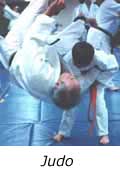 While everyone has an innate fear of falling, most martial artists should learn basic falling techniques not only to avoid injury but to better learn the transition from standing techniques to those on the ground.
The most universal and basic of all fears, across all cultures, is the fear of falling. Behavioral research has established that babies are born with only two natural fears. One is a fear of certain noises and the other is the fear of falling. Over time people develop other fears. Many can become critical problems that disable normal functioning. On the other hand, most people can also overcome their fears and learn to cope with them. Learning to deal with the fear of falling can establish an important sense of confidence that often will translate into the ability to deal with other fears.
The earliest and most primal fear we experience is falling, but most people have many opportunities to fall and realize at a young age that they can survive. Recreation and sports activities can accelerate that level of acceptance. Activities as diverse as gymnastics, football, hiking, and skateboarding provide plenty of opportunities.
The earliest and most primal fear we experience is falling, but most people have many opportunities to fall and realize at a young age that they can survive. Recreation and sports activities can accelerate that level of acceptance. Activities as diverse as gymnastics, football, hiking, and skateboarding provide plenty of opportunities.
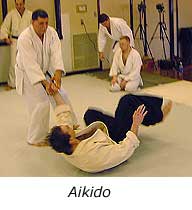
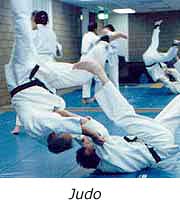
No activity deals with the fear of falling so directly and positively as judo and many jujutsu systems. Aikido is similar but places equal emphasis on rolling as well as initiating falls in response to a number of joint manipulation techniques. Karate, taekwondo, kung fu and other like systems also have many tripping, sweeping, take down and throwing techniques. Some forms of classical Japanese sword and weapon arts also incorporate foot sweeps as part of their curriculum.
Richard Carlson, author of “Don’t Sweat the Small Stuff,” defines fear with the acronym False Evidence Appearing Real. In general, fear is an unrealistic expectation of a negative, usually painful, outcome. It is often self-perpetuating and difficult to change. When we fear something we often try to avoid it. Yet we all know that the way to overcome fear is to face it, recognize its damaging effects, and begin a step-by-step process of dealing with it.

In classes around the world this is typically the first thing judo, aikido and many jujutsu teachers focus on with new students. Before people can be expected to participate in any sports activity involving physical contact or falling, they should develop certain skills and learn to overcome their fears so they can feel comfortable falling. Yet judo, aikido and many jujutsu systems are unique among sports and martial arts in the way it incorporates a scientific approach to the methods of falling called ukemi.
Unfortunately most karate and taekwondo, and kung fu, neglect proper training in falling or rolling. This is probably due to the fact that throwing, sweeping, tripping or takedowns are considered secondary techniques.
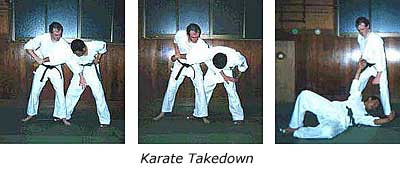
But it is so important to success in any system that incorporates these techniques that students practice ukemi (falling techniques) not just when they are beginning to learn, but as a part of almost every practice session. This is obvious in judo, aikido and jujutsu but also important in other arts to avoid potential injury.
Jigoro Kano, the founder of Judo, explains the importance of ukemi this way:
“As I have often said if one hates to be thrown, one cannot expect to become a master of the art. By taking throws time after time, one must learn how to take falls and overcome the fear of being thrown. Then one will become unafraid of being attacked and be able to take the initiative in attack. Only by following this manner of training can one learn true Judo technique.”
It is not possible to excel in throwing, or to defend against an attack successfully, without a thorough understanding of falling. It is also not possible to be successful in matwork (ground fighting) without learning to control the transition from standing to the mat, the very definition of falling.
The traditional order of training is to move from the simple to the more difficult. Each person will progress at his or her own speed but the basic steps are as follows:
1. At first practice falling or rolling from a low position, and gradually move higher.
2. Learn one direction and style of falling, then learn to fall or roll in other directions.
3. First fall or roll in place, then add movement.
4. In the beginning move slowly and carefully, then increase speed.
5. First fall by yourself, then have a partner throw you. In aikido learn self-sacrifice throws only after mastering the basics of falling and rolling. Here it is often helpful to have a partner assist you. In Judo or jujutsu when someone is throwing you, repeat the learning steps 1 through 4 (i.e. start with a low throw, one direction, no movement, and slow speed).
This step-by-step approach to safe falling, rolling or self-sacrifice throws sets the stage for developing confidence, coordination, and control. Learning to fall properly and safely can be a big step towards facing some of the other more difficult lessons that come with intense training. In addition, this method of learning will immediately transfer well to the study of your first throws, sweeps or takedowns. For example, in judo first learn easy throws, in one direction, without movement, slowly with a cooperating partner. As you master each element then add other directions, movement, resistance, etc.
Knowing the importance of ukemi, strive to improve your skills. Challenge yourself by practicing different ways to fall, keeping safety uppermost in mind. Constantly work on developing a fearless attitude that will eventually allow you to relax and fully enjoy the complete Judo experience.
Neil Ohlenkamp
Neil Ohlenkamp
Member – US Ju-Jitsu Masters Caucus
California USJJF Regional Representative
Mr. Ohlenkamp holds a sixth degree black belt in Judo and a sixth degree black belt in jujitsu with over 36 years of training and experience in various martial arts as a competitor, instructor, team coach, and tournament official. He has been awarded black belt rank certificates by the United States Judo Association, United States Judo Federation, Southern California Black Belt Association (Nanka Yudanshakai), United States Martial Arts Federation, United States Ju-Jitsu Federation, and the Kodokan Judo Institute in Tokyo, Japan. He is an active member of these organizations as well as United States Judo Inc. and the International Judo Coaches Alliance.
Mr. Ohlenkamp has been teaching martial arts for twenty five years, and has been the head instructor of the Encino Judo Club since 1985 responsible for classes in four locations teaching over 350 students each year, with the help of 25 other black belt members of the Encino Judo Club. He has developed highly successful Judo, jujitsu and self defense programs for various health clubs, churches, schools, employee groups, community centers, youth centers, and recreation centers throughout Southern California. He has trained athletes and coaches in seminars and clinics at the Olympic Training Center in Colorado Springs as well as other cities in the US and Europe. He has trained national champions as well as recreational Judo players. He is widely recognized as a leader in the teaching and promotion of Judo and jujitsu for sport and self defense.
Mr. Ohlenkamp has been a coach and advisor to the Braille Institute of America Judo Team since 1976. Due to the success of the local Judo program, he led the way in creating a national Judo program for blind athletes, and served many years as head national coach and coordinator for the U.S. Association for Blind Athletes. He was the U.S. Team Coach at the 1988 Paralympics in Seoul, Korea, the 1989 World Championships in Manchester, England, and the 1990 World Championships and Games for the Disabled in Assen, Netherlands. Coordinator of numerous elite athlete training camps, national and local tournaments, and other training opportunities for the visually impaired. He has trained many blind national and international champions, as well as other coaches and instructors. He also served as the US Representative to the International Blind Sports Association Judo Technical Committee from 1988 to 1993 and was instrumental in creating the international rules for visually impaired competitors.
Mr. Ohlenkamp has been certified by the United States Judo Association as an instructor, referee, master coach, and master rank examiner. Certified by the American Coaching Effectiveness Program and the International Blind Sports
Association, with standard Red Cross first aid and CPR certification. He earned a Bachelor’s Degree in Child Development with a specialty in recreation from California State University, Northridge and has completed post- graduate studies in Public Administration.
As a pioneer in promoting martial arts around the world through the internet, Mr. Ohlenkamp created one of the first web pages devoted to Judo. Since 1995 his Judo Information Site has been the most highly acclaimed, most popular, and most comprehensive Judo web site on the internet. He has also contributed to martial arts books, and had articles published in most of the major Judo publications in the US.
Search for more articles by this author: