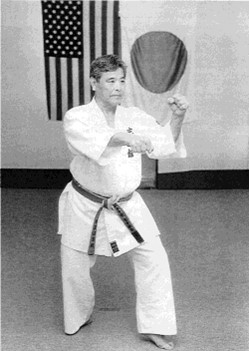
Seikichi Iha
By Ernest Estradae
This interview is a compilation of numerous discussions and interviews between 1985 and 1992 and was conducted at the Original Okinawa Karate dojo and at the home of Seikichi Iha. Mr. Iha is the senior most practitioner of Okinawa Shorin-ryu residing in the United States and is ranked a Hanshi 9-Dan. He teaches Chibana-style shorin-ryu and calls his method Okinawa Shorin-ryu Shidokan Karatedo.
HISTORY
Seikichi Iha was born in Nishihara City, Okinawa Prefecture on July 12, 1932. He presently runs his own dojo, the Original Okinawa Karate Dojo, in Lansing, Michigan.
He was promoted to Hanshi 9-Dan by his teacher, Katsuya Miyahira on March 12, 1989. He is the U.S. Branch Chief for the Okinawa Shorin-ryu Karatedo Association.
Iha began his karate training under his uncle but in 1950 he was accepted as a formal student of Shinpan Gusukuma. Gusukuma was a student of the famous Ankoh Itosu and was a well respected authority of Shuri-te. Since Gusukuma was an educator and a noted acupuncturist, he was very particular as to who he would take as a student. He was also very strict and scientific in his training and application of Karatedo. Although Gusukuma was physically small in size, he was very powerful in his techniques believing that a karate man worth his salt could hit with three times his body weight. Gusukuma was a stickler on conditioning the body through body contact and through the practice of the makiwara punching board. This concept is passed on to all of Iha’s students.
Iha trained with Gusukuma for four years. After Gusukuma’s death in 1954, Iha was introduced to his next teacher by his good friend, Shoei Miyazato. Iha met Katsuya Miyahira in 1954 and was accepted as a student shortly thereafter. Miyahira was very much like Gusukuma in that he was a school teacher with a very strict and scientific method of teaching Karatedo. Iha progressed in Karatedo at a steady pace so that by 1963 he had been promoted to the rank of 5-Dan Shihan in Okinawa Shorin-ryu. At that time, Katsuya
Miyahira received a request from the Philippine Islands asking for a Shorin- ryu instructor. Iha was chosen and spent approximately 11 months teaching Shorin-ryu at the dojo of Latino Gonzales in Manila.
Iha returned to Okinawa during the latter part of 1964 and began teaching the U.S. Marines stationed at Futenma, Okinawa. At that time he was promoted to 6-Dan and opened up his own dojo in his home town of Nishihara. In 1967 Iha was promoted to the rank of Kyoshi 7-Dan and sent to teach in Los Angeles, CA. Iha initially began his karate teaching at the American-Okinawan Club located in Los Angeles. He is recognized as the first Okinawan Master Instructor of Shorin-ryu to teach in Southern California since 1927 when Kentsu Yabu taught for the same club.
After teaching shorin-ryu at the American-Okinawan Club for five months, he and two other 7-Dans opened up the Shureikan Dojo on Olympic Blvd. A year later, Iha went off on his own and opened his Shidokan Karate Dojo on West Pico Blvd. Iha moved to the Lansing area in April of 1975 and began teaching at the Original Okinawa Karate Dojo. In September of 1978 he was promoted to Kyoshi 8-Dan. On March 12, 1989, he received his Hanshi 9-Dan certification from Katsuya Miyahira making him the highest ranking Okinawan residing in the United States. His rank is certified by the Okinawa Shorin-ryu Karatedo Association.
MAKIWARA TRAINING
There are two kinds of makiwara. One is called a Shuri-makiwara and it stands to the height of the instructor’s breast bone. The other is called a Naha-makiwara. The Naha-makiwara was mainly used by goju-ryu practitioners. It stood as high as the instructor’s solar plexus (the bottom of the breast bone). The shorin-ryu practitioner would stand up in the kihon dachi (basic short stance) and throw the punch at the board. The goju-ryu practitioner would punch from a shikko dachi (square stance). The dojo usually had two kinds of makiwara. One was a soft/pliant makiwara and the other one was usually a stiff/hard makiwara. The soft one was used to develop speed in technique while the stiff one was used to develop power.
Both had to be used. If they were not then you would develop problems with the shoulder. Nowadays, most Okinawan practitioners use only the Shuri- style makiwara because the Naha-makiwara is too difficult and hard to use. The soft makiwara is off center about five inches. The measurement is from the tip of the thumb to the tip of the forefinger. By punching the soft makiwara, you end up with the board in an upright position — this way you make sure that you are using the correct knuckles.
SHORIN-RYU TRAINING HINTS
The punching fist must be horizontal to the ground. The elbow strike is also horizontal to the ground. The knife hand block begins like a windshield wiper and does NOT come back to the shoulder. All shorin-ryu kicks are done with the toes. Sometimes the second toe wraps itself around the big toe to reinforce it for kicking. The nukite (spear hand) can be done to any part of the body but preferably to a soft section. It is a quick motion and you can hit from different directions. The idea is that you strike with the fingertips Okinawan karate must have focus in order to be called Okinawan karate. Without focus you are doing nothing but sport. The Nakama Gojushiho and Nakazato’s Gojushiho are the same. They use the wedge type block. The Tokuda Gojushiho is a block punch. This makes much more sense. In the knife hand block the hand is not bent but kept straight. Some other practitioners like to bend the block at the wrist. This is much too weak and can damage you if you really block hard. One of the secrets of shorin-ryu is called the “tan gokui.” This means the “secret of the lower abdomen.” Shorin-ryu focuses on natural breathing and not forced or fast breathing. The inhalation is slow so as not to show your opponent the rhythm of your breathing. You never fully exhale your breath but hold a reserve of air in the lower part of your abdomen. Shorin-ryu teaches one to focus on one’s breathing and to learn to control it.
CHOSHIN CHIBANA
Chibana always trained hard. Even when he reached eighty years of age, he liked to do things strongly. Only after the cancer began eating him away did he slow down. He was strong as an old man and could still kick and do things with power. He was amazing. One of Chibana’s favorite sayings was that a “martial artist must also be a man of letters.” This means that a martial artist must also study the writing arts. An example would be calligraphy, writing books, the fine arts, painting, etc. Chibana would always stress the body and the mind. The martial artist must also exercise the mind through education, research and writing.
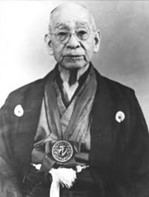
You celebrate the death of Chibana through a “TAISAI” every year. You have a party. The master’s picture is placed on a table and you burn incense. You have a party with food and drink. The master’s spirit comes to each remembrance wherever it may be held. The most important TAISAIs are the 1st, 2nd and 3rd year. Then the 10th, 13th, 20th, 23rd, 30th and 33rd. If the individual is remembered on the 33rd anniversary, then the spirit can enter the “gate.” The spirit can then rest from its wanderings.
SHINPAN GUSUKUMA
Shinpan Gusukuma was known for his great speed in foot movements. He took short steps with great speed — very much like a kendo practitioner. Gusukuma was known to have run side-ways on a wall for five meters without falling. He practiced this technique in order to force the feet to move faster. It worked. Even though Shinpan Gusukuma died in 1954, all the old people of Shuri and Nishihara remember him well. He had three sons and one daughter and had his original dojo in Shuri City. He later moved to Naha in 1953 – the year before he died. He had a three tatami dojo (sanjo) and did acupuncture on the side to make ends meet.
You could go to his dojo at any time of the day or night. If he was there, he would give you instruction. If he was not there then you were expected to train by yourself. He taught the old style of shorin-ryu — sui-te in the Shuri Hogan language. He never corrected your kata until after you had done it. He had a very good memory and would point out all of your mistakes. He always had you do the kata by the “no count method.” In this way you were made aware of the “rhythm” of each kata.
SHORIN-RYU SHIDOKAN
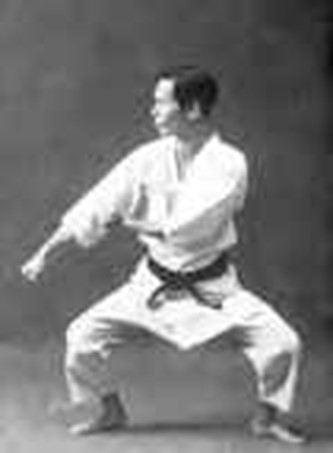
The Shorin-ryu Shidokan Miyahira Dojo was founded by Katsuya Miyahira in 1951. The fortieth year anniversary was held in Naha, Okinawa, in March of 1990. Miyahira started with Chibana in 1933. He was originally a school teacher and was sent to Manchuko (Manchuria) during WWII. Upon the death of Chibana, Miyahira received the hanko (seals) and presidency of the Okinawa Shorin-ryu Karatedo Kyokai. He is still the president and holds annual Taisai celebrations (at the time of Chibana’s death).
Katsuya Miyahira taught differently but just as strictly. Miyahira corrected each movement just like Chibana. He was always very scientific and always had you do the kata “by the count.”
SHORIN-RYU KATA
It is always a lot easier to teach the Pinan kata before the Naihanchi kata. The Naihanchi forms need dedication and students find them hard to do initially. Under Gusukuma the kata order was as follows: the kihon 1 and 2; Pinan 1-2-3-4-5; Patsai-sho and Kusanku-sho; Patsai-dai and Kusanku-dai; Chinto; Gojushiho; followed by the Naihanchi series.
S HORIN-RYU KICKING
The round house kick is also done with the toes. The foot is in a straight line with the bones of the feet and it is not bent. It is not at a 90 degree angle like a heel kick and it is not fully extended as a front toe kick. It is in the middle. The front kick must hinge out to the target. The kick is always chambered next to the supporting leg before it snaps out. The kick is then retracted to the knee area of the supporting leg before it is brought back to the ground. In the “old days,” the kick was never extended past the extended punch. You always kicked within the extended fist. It is too difficult to do nowadays and students just ignore this concept.
Nowadays, the students often seek the easier way and extend their kicks way past their fist. This is a sport kick but it is okay for those that do not really understand kicking.
Remember that in kicking, the foot must be tight with the leg loose. You then “hinged” the kick out. The kick must be chambered — then kick — and then re-chambered before the foot is set down. All the kicks in shorin-ryu
are done with the toes. I think that 85% of all the kicks are done mid-body. We then do have a thrust made to the head but only about 15% of the time.
SHORIN-RYU PUNCHING
The punching is done straight forward with the arm being horizontal to the ground. The hand is held “softly” at the side — that is, without tension. The hand goes out with speed and only focuses at the end of the punch. Shorin- ryu punching is based on speed first and power second. The elbow is at the side and it rests on the soft portion of the body between the hip bone and the floating ribs. The shoulder is down. The hand fully rotates at the end of the punch. Remember, above all, that the fist is tight but the shoulder is loose. This is very important The backfist is only found in the Naihanchi forms. All the rest that look like backfist are different. They are extended and you have a tendency to hit with the forearm before you go into the face.
SHORIN-RYU BLOCKING
The wrist is even with the shoulder at the middle block level. In Naihanchi Shodan, Chibana-sensei initially had the back knuckle strike come from theinside. In 1964-65 he changed it to the outside. This was because of the bunkai. If you practice the bunkai with the kata you must do the technique to the outside. If you don’t practice the bunkai then there is no need to do it to the outside. Blocking takes skill. Initially, while you are young, you concentrate on developing the power of the block. As you become older and more mature in your technique, you develop soft power. This soft power may be a mixture of timing and knowing when and where to block.
Chibana was an expert in soft blocking. He would always want you to strike at him strongly but his blocking was so smooth and correct that you would often lose your balance when he blocked. He often stated that breaking the attacker’s balance is often more important than just merely blocking.
TRAINING DEVICES
The most common training device in Okinawa is the chi-ishi. Everyone just “knows” how to use it. There are about eight different exercises that were taught in the Chibana dojo. They were specifically used to develop wrist and arm strength. You would do one exercise until you got tired and then switch
hands. You would continue with the chi-ishi exercises for about 15 to 20 minutes.The Japanese were always amazed at how well muscled the Okinawans were. They did not know about the chi-ishi and the nigiri-game training devices. They quickly adopted these methods. The chi-ishi comes from China but is practiced by all Okinawan styles. It is not practiced in the United States because there are not that many who actually trained in Okinawa. The chi-ishi and the nigiri-game develop real karate-spirit. It is hard training.
The nigiri-game is also a strength building tool and it is used to develop the grip. There are about three or four exercises and it is also an ancient training device used by all Okinawan practitioners. Look at the old karate pictures and you’ll see them in the dojo. One of the chi-ishi exercises that is not used in shorin-ryu is the double arm movement that looks like you’re punching with a bo. This exercises forces a student to stutter when he moves and this type of movement develops bad habits. The goju-ryu practitioners use this movement a lot but it is not done by shorin-ryu practitioners. The common weight is about 3-5 pounds for a beginner and 7- 10 pounds for an advanced student. If you want to develop more power then you can use 22-25 pounds. You must always remember that it is never the weight but it is always the quality of the movement. Learn to do it correctly and learn to concentrate (focus) on what you do.
Seikichi Iha (a senior student of Katsuya Miyahira) stated that the karate practice today is quite different than that of the early post-war years. Back then all Okinawan stylists stressed a lot of block-punch or block-counter techniques. Nowadays American stylists block, pause and then punch. It should be a block with an immediate punch or counter. During those post-war years, the senior teachers would stress kata analysis using a partner at least a couple of nights per week. The students would practice two or three hours of kata bunkai. Very rarely did they practice self-defense techniques such as ippon kumite or goshin-jutsu training. Everything came out of the kata and hundreds of repetitions were stressed.
Knowledge of fighting came strictly out of the orthodox kata. During the 1950’s rank meant very little and Iha never really knew his instructor’s rank other than his teacher was considered a master of the shorin-ryu style. Iha started his training in karate simply because everyone just did! He also felt that this was a chance for him to do something
constructive with his time. He never knew that it would be a lifetime of training and devotion to the art of shorin-ryu Karatedo. During that period of time, Gusukuma (Iha’s first master teacher) stressed basics and repetition upon repetition of kata. Gusukuma especially like the kata Patsai- dai (which is the present day Patsai-sho). He stated that the kata that we now do is wrong. By wrong he does not refer to movements but to how we train to do it.
Gusukuma would teach the students the understanding of kata by breaking it down technique by technique. You would master each major technique until they were strong and smooth. Then you would end up putting the kata together after all the various parts were mastered. Nowadays, most people do not take a real interest in traditional training and only seek the flashier movements of kata. Old fashioned training methods are often considered too boring and too tiring. Today’s karate students just practice the whole kata at one time with the hopes of mastering the whole in a shorter period of time! Doing good kata is like reading a book – you read one chapter at a time in order to understand what the writer is really saying… rather than just reading the end and hoping that you can figure out how the author got there. By just “reading” the end, you will never understand what the author was really trying to say or what he was trying to pass on… in other words you may learn how but not the why of the kata!
SEIKICHI IHA’S PROMOTION
Seikichi Iha from East Lansing, MI, has just returned from Okinawa where he was recently promoted to Hanshi 9-Dan by the Okinawa Shorin-ryu Karatedo Association. Iha began training in the late l940’s with Shinpan Gusukuma. When Gusukuma died in 1954, he began training under Katsuya Miyahira.
On March 15, l966, Choshin Chibana awarded him his Shihan certification and onSeptember 3, 1978, he was promoted to the rank of Kyoshi 8-Dan by Katsuya Miyahira who is the president of Chibana’s organization, the Okinawa Shorin-ryu Karatedo Association. On March 12, 1989, Iha was promoted to Hanshi 9-Dan.

Ernie Estrada
Estrada is a well know teacher, historian and writer on the martial arts and is considered by many as one of the most knowledgeable authorities on modern Okinawan history. He began training in Okinawan karate-do at his local YMCA in 1960. In 1963 he joined the US Military and served in Japan and Okinawa. Later he was re-assigned to Washington, DC, and worked as a translator at the Pentagon for two and one half years. In 1972 he was promoted to shihan by the Zen Nippon Karatedoh Renmei (All Japan Karatedoh Association) in Okinawa Seito Karatedoh. In 1973 he also was promoted to shihan by Nakazato Shugoro Sensei in Okinawa Shorinryu Karatedo (Chibana-ha). Has been an active teacher of Chibana-ha Shorinryu since 1970 and has taught in Argentina, Mexico, England, Germany, Spain, Ethiopia and Canada. Presently he teaches Chibana-ha Shorinryu in Michigan. Professionally he is a retired Probation Officer supervisor (31 years) and now works full time as a court appointed Fiduciary. Over a period of 30 years he has researched karate and interviewed a wide assortment of well known Okinawan karate teachers. He has authored numerous articles for a variety of martial arts publications and as well as a series of 15 booklets based on his research. His most current project is to transfer 500+ VHS videos of Okinawan karate-do training and demonstrations to DVD. Next year will be the transferring of 300+ rolls of 8mm and super 8mm to DVD.
Search for more articles by this author: