
Uke: Receiving
By Dave Lowry
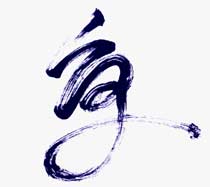
Editor’s Note: This article is an excerpt from “Sword And Brush,” a book detailing martial arts strategic principles the author considers to be important to a broad range of Japanese martial arts. In this book he explains various characters and their meaning in the context of the martial arts. This excerpt addresses the meaning of the kanji character “Uke.”
 When the conversation leads to the subject of toughness, as inevitably it will among young men and women in transit on the Way, opinions will flow liberally. This master, it will be recounted, knocked an opponent senseless with the briefest riposte. That one, someone will say, uprooted young trees with his bare hands. Still another will be said to crush stalks of green bamboo with his bare hands. Comparative feats of strength are presented as proof of toughness in these conversations, especially those among younger bugeisha (a student of old style martial arts). The more senior exponents, however, tend to have a different way of measuring toughness. With experience comes too, the knowledge that toughness is less a matter of dishing it out and is really more the ability to receive.
With experience comes too, the knowledge that toughness is less a matter of dishing it out and is really more the ability to receive.
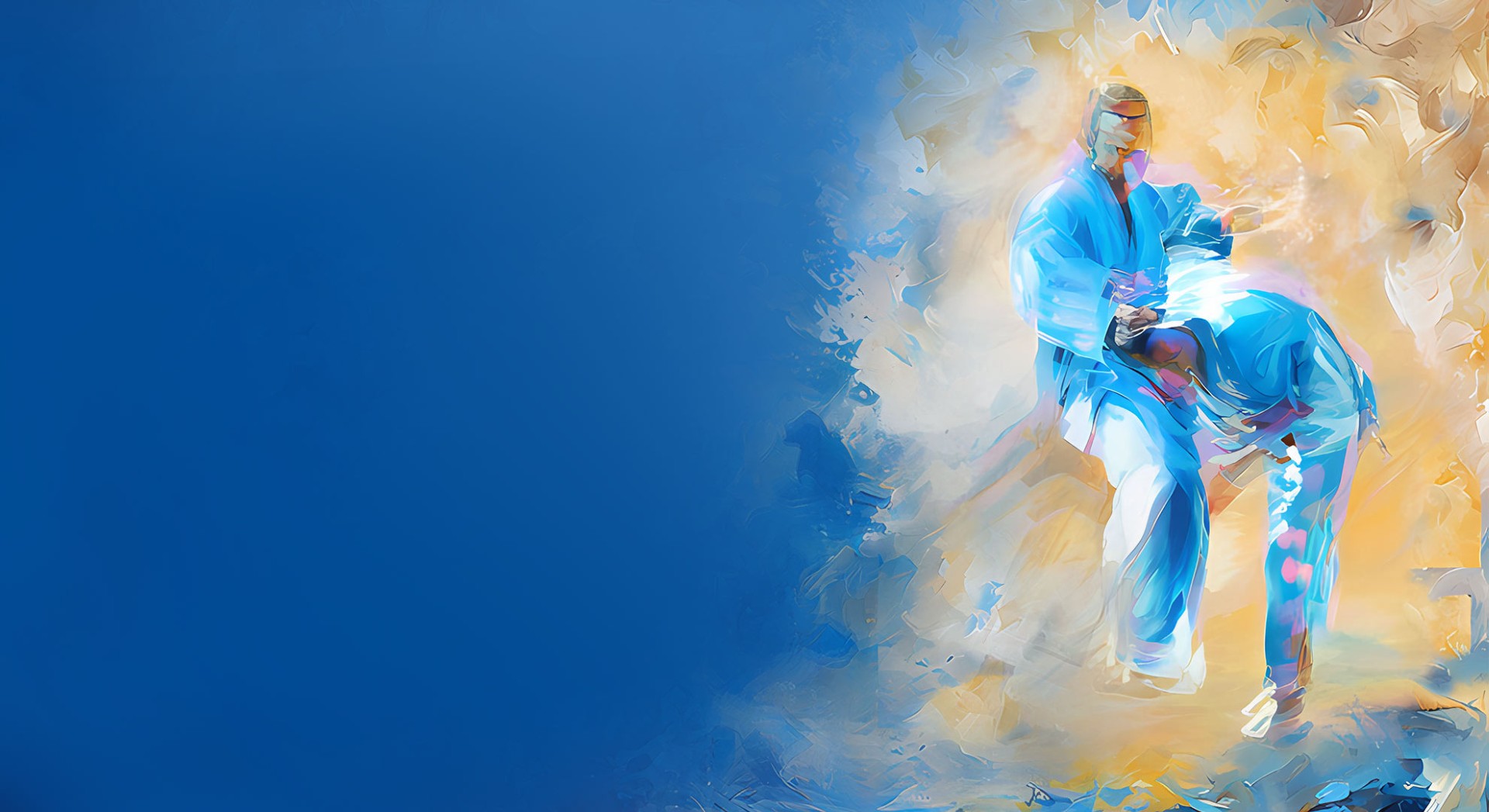
Uke is a pictographic kanji (Japanese character), one written to depict two hands, one reaching down, the other stretching up, and between them is placed the character for “boat.” This “conveyance of goods from one person to another” became, over the centuries, the kanji to indicate the act of “receiving.” The bugeisha uses the word frequently. In grappling bugei, the method of falling safely are collectively called “ukemi,” the “receiving body.” In judo terminology, the exponent thrown is “uke,” the “receiver.” Of the pair in karate practice, the one under attack is the “ukete,” the “receiving hand.” In kendo, the defender is “ukedachi,” the “receiving sword.”
In these and other expressions in the bugei lexicon, the importance of the term “uke” is significant. It is commonly mistranslated in judo circles as the “taker” of a technique. Uke is thrown and so is considered the “loser” in this way of thinking.
To be on the uke end of training is not to be passively accepting of the technique. It is instead the attitude of receiving, meeting the throw on one’s own terms.
To understand that “uke” means more exactly “to receive” opens new views for the practitioner. To be on the uke end of training is not to be passively accepting of the technique. It is instead the attitude of receiving, meeting the throw on one’s own terms. The mentality of the uke is not one of resignation or worse yet, of stubborn resistance. The uke flows, absorbs the force of the throw, and while he does fall, his ukemi does not necessarily signal defeat. His fall is one he controls. He receives — and bounces up again.
The term “ukete” in karate and “ukedachi” in kendo are subject to a similarly misleading translation. Here they are thought of incorrectly as designating the participant who “blocks” an attack. Not so. The “ukekata,” or “receiving forms” of kendo and karate require a receiving of the incoming force in order to redirect it away or to use it to come back against the attacker.
In the mature training hall will be very senior bugeisha, older men and women, and they can be seen happily taking falls or blows, over and over, from children trainees. Against adolescent members, young and full of themselves, the senior will be just as complacent, mildly taking all the excess energy of youth without a bruise or wince, until, among the brightest of the youngsters, will come the realization that there is something more to all this activity than it seems. They will, some of them, begin to suspect that the toughness of these older bugeisha is a thing yet to be discovered out there along the way. They will have begun to see the true toughness of receiving.
Dave Lowry
Dave is an American writer best known for his articles, manuals and novels based on Japanese martial arts.
Mr. Dave Lowry literally grew up in the Japanese cultural arts. As a boy, he commenced a lifelong study of Yagyu Shinkage Ryu swordsmanship under a Japanese teacher who was living in Missouri. In 1985, Mr. Lowry’s experiences growing up as a Westerner, who was deeply immersed in Japanese cultural and martial arts, formed the basis for his publications.
In addition to Yagyu Shinkage Ryu, Mr. Lowry has trained in karate-do and a variety of modern martial ways. His current and primary martial arts activities are focused on Yagyu Shinkage Ryu, Shindo Muso Ryu (an old combative art utilizing a four-foot staff), and aikido. He has also practiced a wide variety of Japanese arts including go (an ancient Japanese game), shodo (calligraphy), kado (flower arrangement), and chado (tea ceremony).
Mr. Dave Lowry has a degree in English, and works as a professional writer. He has authored numerous books related to budo the Japanese concept of the “martial way.” He has written training manuals on use of weapons such as the bokken and jo, novels centered on the lifestyle of the budōka (one who follows the martial way), and many articles on martial practices and traditional Japanese philosophy. He has been a regular columnist for Black Belt magazine since 1986, where he writes on the traditional arts and has contributed to FightingArts.com. He has also served as Senior Advisor to the SMAA (and contributor to its Journal), an organization dedicated to providing realistic survival orientated defense training and education.
Search for more articles by this author: